Tuesday, December 29, 2015

Barwani blinded by corruption

Blinded by corruption: Systemic failures cripple Madhya Pradesh healthcare

40 people blinded in a botched eye camp underline corruption and rot across the state’s hospitals.
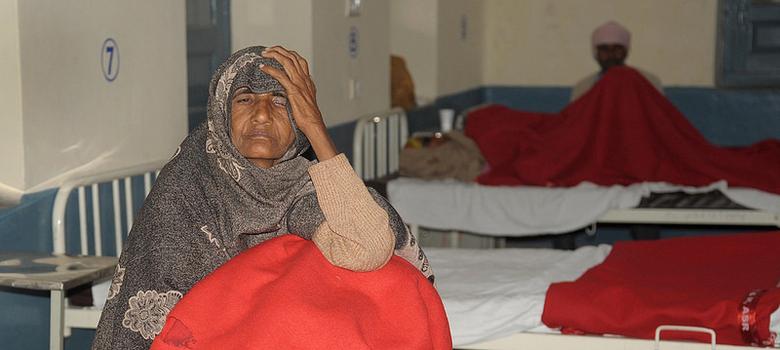
Photo Credit: Reuters (Illustrative File Photo)
11.8K
Total Views
 
Rasheed Kasim of Ekalwara village cannot see.

In order to correct an uncertain vision, he underwent a cataract operation at a camp in Barwani district, Madhya Pradesh, last month – and lost the little sight he had. “I have two daughters to marry off,” Kasim wailed. “What will I do now?”

Kasim is one of 40-odd people, most of them over 60, who have suffered complete loss of vision after being operated on at the camp. 27 of the victims are now being treated at two of Indore’s hospitals- Maharaja Yashwant Rao Hospital and Sri Aurobindo Institute of Medical Science. Doctors there however say these patients will likely never recover their sight.
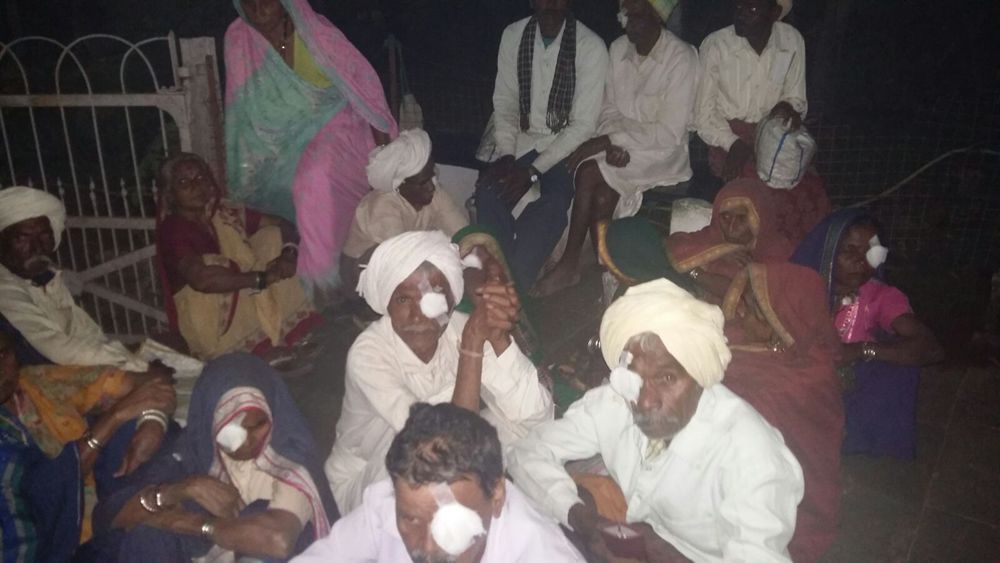
Photo courtesy by Hemant Garg,Barwani 

Dr NK Agrawal, deputy director of the National Programme for Control of Blindness, in a report to the state government said the issue is with a contaminated eye-wash, manufactured by the Indore-based pharmaceutical company Beryl Drugs.

Dr RadheshyamPalod, head of ophthalmology at Barwani district hospital, and six paramedics who assisted in the camp, have been suspended – an act of appeasement that diverts attention from more serious systemic issues.

Barwani’s district hospital, like most others in Madhya Pradesh, is housed in dilapidated premises and lacks basic operating room facilities. Despite the conditions, eye camps have been regularly organised at Barwani – Palod has an estimated 30,000 operations to his credit.

Palod says he has been writing to the health department and the district administration for six years now, asking for facilities to be upgraded. Ajay Singh Gangwar, District Collector of Barwani, admits he is aware of the conditions but has no funds to spare. “Not just the operation theatre, the entire hospital building needs urgent renovation”, Gangwarsays.However Gauri Singh, the state’s Principal Secretary (Health), says the issue of lack of funds was never raised to her.

While bureaucracy passes the buck, "incidents" such as the botched Barwani camp occur with predictable regularity. Three years ago, six patients developed infection after routine eye operations in Seoni district. In the same year, two patients lost their sight at a camp in Khandwa district. In 2014, four patients were blinded in a camp in Chhindwara district.

The state health department facilitates an estimated five lakh cataract operations across the state, almost all of them in hospitals where conditions mirror the sorry state at Barwani.

Where does the money go?

An investigation by the Hindi daily DainikBhaskar in the wake of the botched Barwani camp found that operation theatres in most of the state’s 51 districts are ill-equipped, unhygienic and in violation of the health department’s own basic guidelines.

A day after the story appeared, Chief Minister Shivraj Singh Chouhantold the state assembly that surgical operations in district hospitals across the state would be suspended till facilities were upgraded. He further announced the formation of a three-member committee to suggest improvements. In related moves, the state government banned 19 substandard drugs being supplied by 13 companies, and announced an ‘infectionaudit; of operation theatres across all district hospitals.

Ironically, the state health department’s budget has more than doubled over the past four years –from Rs 2,165 crore in 2011-‘12 to Rs4,805 crore in 2014-‘15. Of this, the government has earmarked Rs180 crore towards purchase of drugs for this financial year alone, in addition to the Rs85 crore that the state received via the Central government’s sponsored health programmes.

Funding, thus, is impressive – and so too, on paper, is the state’s public healthcare system: 51 district hospitals, 334community health centres,66 civil hospitals, 1,171 primary health centres and 9,192 sub-primary centres.
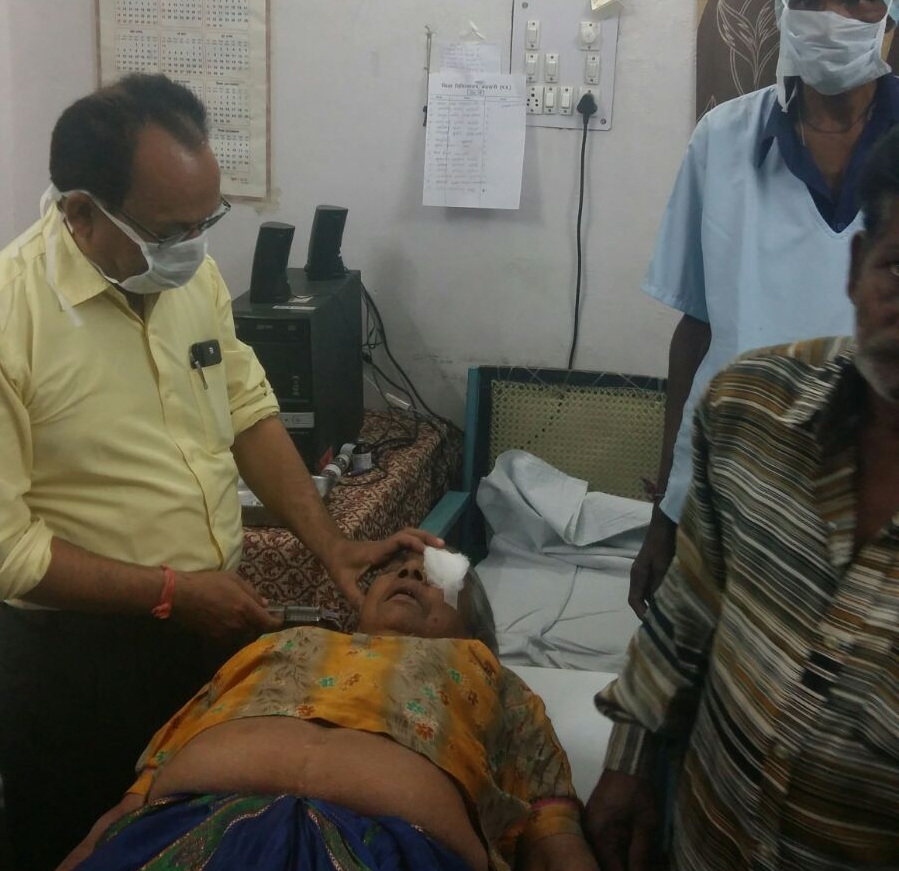
Photo courtesy by Hemant Garg,Barwani 

Staffing, however, is woefully inadequate. Against 3,195 sanctioned posts, the state employs only 1,215 medical specialists; only 2,996 medical officers are employed against the 4,833 sanctioned posts. Of these, the majority of officers are unwilling to work in the rural health centres – a problem the chief minister himself has underlined at various times.

Three scams, one big mess

Coupled with this administrative failure is the more glaring inability of the Shivraj Singh Chouhan government to check large-scale corruption in the health sector. The Vyapam scam exposed how a nexus of bureaucrats, middlemen and politicians facilitated admissions of ineligible candidates to the state’s six medical colleges.

A bigger scandal is the large-scale rigging of admission tests for the 1,500 seats in the state’s five private medical colleges. The DMAT (dental and medical test) scam is worth Rs10,000 crore annually, according to whistle-blower Dr AnandRai who has pointed out that private colleges have been admitting affluent students on the basis of sham DMATs, and charging fees ranging from Rs 30 lakh to Rs one crore per seat.

Despite the Vyapam and DMAT scams being widely reported, the state government has done little to make the admission process to medical colleges more transparent.Meanwhile, seven more medical colleges are in line to start operations in the state.

Alongside these two scams is a third, involving misuse of centrally-sponsored health funds to purchase drugs from spurious companies. Three successive state health directors –Dr Yogiraj Sharma, Dr Ashok Sharma and Dr AK Mittal – have been found to possess assets worth hundreds of crores, in income tax raids conducted between 2008 and 2011. Yet, as the Barwani incident underlines, sub-standard drugs continue to be in use throughout the state’s healthcare system.

The political opposition has blamed state Health Minister Dr Narottam Mishra of having links with Beryl Drugs, the Indore-based company that supplied the eye-wash used in Barwani.

The minister has denied the allegation.


Soyabean dream turns into nightmare

In Madhya Pradesh, farmers find their soyabean dream turning into a nightmare

While Punjab looks to rescue its cotton farmers, a dozen suicides are reported from MP due the failure of a crop that once brought unprecedented prosperity to its farming community.
Photo Credit: Illustrative image. NDTV Video grab
17K
Total Views
 
Hailed three decades ago as a miracle crop that brought about unprecedented prosperity to millions of Madhya Pradesh farmers, soyabean has turned into a fatal cause of agrarian distress in the state. Over a dozen debt-ridden farmers have either committed suicide or died due to shock in the last one week alone because of extensive damage to their crops.

There are reports of the crop being destroyed in 26 out of 51 soyabean  growing districts of the state –  due to scanty rains, in 11, attack of yellow or white mosaic in 12 and excessive rain in three districts.

The government estimates the damage from 35% to 40%, though local newspapers have projected the damage up to 70%, quoting farmers from across the state.

No relief

Whatever the actual assessment, the crop failure is driving farmers to end life while the chief minister is still mulling a relief package for them.

“A relief package is in the work for distressed farmers,” Shivraj Singh Chouhan announced on October 9, soon after he landed in Bhopal from his 10-day foreign sojourn, while assuring farmers that his government would ensure maximum benefit to them on crop insurance.

The troubling fact, though, is that the Rs 515 crore compensation package announced by the state government for over four lakh distressed farmers last year is yet to reach them even as a spate in farmer suicide continues.

The state agriculture minister Gauri Shankar Bisen did not help matters when instead of empathising with the farmers' distress, he said, "Seventy per cent of people live in villages in Madhya Pradesh and most of them are farmers. There could be other reasons for suicide too."

Bisen’s assertion was of a piece with Union Agriculture minister Radha Mohan Singh’s statement in Lok Sabha in July when he quoted from the National Crime Records Bureau in a written reply in the Rajya Sabha to say that reasons for farmer suicides included "family problems, illness, drugs...dowry, love affairs and impotency".

According to the bureau, of the 5,650 farmers who committed suicide, 1400 had done so due to agrarian distress, as reported by the state governments.

The highest 2,568 suicides by farmers were in Maharashtra (45.5%), followed by 898 suicides in Telangana (15.9%) and 826 in Madhya Pradesh (14.6%).

Although no official figures are available for 2015 in Madhya Pradesh, the number of farmer suicides, it is feared, would  be higher than last year because damage to various crops is more extensive this time around.

The miracle that failed

Most of the farmer suicides and shock-deaths in Madhya Pradesh this year have, however, occurred due to destruction of soyabean.

Imported from the United States of America in the 1980s, soyabean spectacularly adapted itself to the environs of Madhya Pradesh and the state emerged as the largest soyabean grower in India, getting to be known as the "soyabean bowl of India", accounting for over 65% of the country’s total production.

The cash crop changed the life of millions of farmers as they opted for mechanisation of agriculture in a big way in  the 1980s. Many farmers bought tractors and other farm equipment from savings earned from soybean cultivation, according to agriculture experts.

However, production started declining in the late 1990s. Experts say a large number of farmers have continued to cling to soyabean cultivation because despite erratic rains and pest attacks over the years, this cash crop of kharif season had proved to be more dependable than traditional crops such as wheat, gram or paddy.

Until this year.

Experts attribute two main reasons for decline in soyabean production: one, lack of research to develop new seed varieties and, two, inability to protect the crop from increasing attack of pests such as white mosaic.

Agriculture expert and former director in state’s  agriculture department, GS Kaushal, says the crop has been suffering almost every year from diseases, and since the annual production is average, prices crash.” Yet, the fall in yield had not been as precipitous in the past as this year, he added.

“The production this year has been hit by white mosaic and shortage of water,” said Rajesh Rajora, the state's principal secretary, agriculture.

Falling exports

Apart from crop related issues, India’s soybean meal exports have dropped drastically by about 85% from a record level of 4.24 million tonnes during fiscal year 2008-09 to a meagre 0.64 MT in 2014-15, noted a just-concluded study by apex industry body Associated Chamber of Commerce.

“Soyabean scenario in India is currently at crossroads due to erratic production, declining soybean meal exports and consequent idling of plants, poor soyabean oil output while edible oil imports are growing and currently account for almost 60 per cent of country’s total requirement,” said DS Rawat, national secretary general of ASSOCHAM, while releasing the findings of its study.

Fall in production has resulted in rise in soyabean price by Rs 10,000 per  tonne this year to Rs 37000 per tonne,  according to Soyabean processors  association of India.  The soya processing sector in Madhya Pradesh, which is estimated to be worth Rs 25000 crore, is under extreme stress. Out of 70 soya processing units in the state, 20 are not in a position to start production.

As the government machinery takes its own time to react to the farmers’ plight on crop loss across the state, series of protests and agitations have started from farmers in various districts.

Damage to other crops, particularly wheat, accounted for most farmer suicides in the state in previous years. Destroyed soyabean  has added one more crop to the list this year, on which cotton has been a prominent name this year from Punjab, in addition to Mahrashtra and Telangana.
We welcome your comments at letters@scroll.in

Saturday, September 12, 2015

Uday Prakash's and coward Hindi writers

What has brought about a rare unity among Hindi writers, left, right and centre?

Is it just a shared sense of humiliation? Or has Uday Prakash’s recent stand against Kalburgi murder and barb at their perpetual subservience played a part in making them take a stand?
Photo Credit: Facebook
The World Hindi Conference organisers have, involuntarily, brought about a rare unity among Hindi litterateurs of left, right and centre ideologies. Most of the prominent Hindi writers have not been invited to the ongoing three-day conference in Bhopal which Prime Minister Narendra Modi inaugurated on September 10.  And even those who were invited boycotted the meet to protest against the organisers’ controversial decision to exclude deliberations on Hindi literature from the global meet’s agenda.

However, as a prominent Marxist writer admits, this fragile unity is borne more out of a shared sense of humiliation than a genuine anger against “the dangerously illiberal BJP governments in states and the Centre”.  This observation finds ample resonance in noted writer Uday Prakash’s polemical view that “the Hindi-speaking region has always yielded to subjugation and same is true about its literature.”

Prakash has recently been in news for returning his Sahitya Akademi award as a mark of protest against Kannada scholar Professor MM Kalburgi’s murder in Karnataka by unidentified assailants on August 30. The former vice-chancellor of Hampi University had raised the hackles of right-wing outfits such as the Vishva Hindu Parishad and Bajrang Dal with his views on idol worship by Hindus.

In a recent interview to Catchnews, Prakash cautioned:
“Don’t expect anything from the sphere of Hindi literature. No luminary from the Hindi belt has ever been the cause of any positive change in the Indian sub-continent. Ambedkar came from West India, Gandhi was from Gujarat and Vivekananda came from Bengal.”

A mirror to Hindiwallahs?

Has he overstated his point out of sheer anger over the Kannada writer’s murder? Or, has he really shown a mirror to Hindi writers?

Most of the dozen-odd Hindi litterateurs, writer-journalists, culture activists the Scroll spoke to tended to agree with Uday Prakash’s viewpoint. A few of them, however, pointed out that many left-leaning writers had registered protests against Professor Kalburgi’s murder in north Indian cities such as Bhopal, Jabalpur, Lucknow, while admitting that stronger actions were needed to wake up people against increasingly intolerant right wing forces.

However, most of these left-liberal personalities with such views also happened to be Prakash’s friends from his home state Madhya Pradesh. Prakash’s close friend and prestigious BD Goenka awardee journalist-poet Raaj Kumar Keswani said he couldn’t agree more with the rebel writer. “Not only in literature, in all spheres of creative writing, including journalism, conformism has increased alarmingly. The regrettable trend is more pronounced in the Hindi belt as Uday Prakash rightly pointed out.”

Keswani, though, was optimistic that “the cosy-club relationship between the establishment and the intelligentsia is sure to break up as saffron dictatorship under the Modi regime is most likely to degenerate into an Emergency-like political chaos.”  Recalling a surge in rebel literature after the Emergency, he said, the "best writing always emerges during the time of crisis.”

Octogenarian editor-writer Gyan Ranjan shared both Udai Prakash’s cynicism and Keswani’s optimism. Editor of Pahal , one of the most prestigious Hindi literary magazines, for over 42 years, Ranjan reasoned that protests by the Hindi writers have been rather subdued in the past partly because, with all their weaknesses, the previous governments did not pose so great a danger to creative freedom as the Modi government does.

He said he barely escaped arrest during the Emergency because there were “many liberal enough people in the Madhya Pradesh government” who respected freedom of expression.  “But”, he warned, “dissenting voices face existential crisis and not just danger to creative freedom as saffron forces rise menacingly with tacit blessing of the BJP government. Professor Kalbugi’s murder is another chilling reminder of this. ”

Veteran theatre director Arun Pandey of Jabalpur faced threat to his life from saffron activists in 2002 when his group “Vivechana” staged Uday Prakash’s play Aur Ant me Prarthana (And prayer at the end).  In the midst of the performance, Bajrang Dal and VHP members barged into the theatre hall and vandalised the show in Jabalpur. The play has an oblique reference to the Rashtriya Swayamsewak Sangh which the hooligans did not like.

Pandey completely endorsed Prakash’s decision to return the government award. The theatre director also felt that most Hindi writers succumb to allurement or pressure when chips are down.

Timid response

“What to speak of government, we have seen prominent writers prostrating before just a bureaucrat. Can we forget how Hindi litterateurs would wag their tails before then culture czar and IAS [Indian Adminsitrative Service officer] – poet Ashok Vajpeyi in 1980s and 1990s?”

Vajpeyi was trustee-secretary of multi art complex Bharat Bhavan, Bhopal. During his stint, the Hindi literary world appeared to be divided neatly between those who supported or opposed him. With Vajpeyi at the helm of Bharat Bhavan, the fulcrum of Hindi literary polemics seemed to have shifted from New Delhi to Bhopal. On one side were litterateurs known as ideologically social democrats and ranged against them were Marxists. Veteran Hindi critic Dr Namvar Singh was leading the Marxist charge against Bharat Bhavan, ably assisted by Gyan Ranjan from Jabalpur. Ranjan, though already famous, had risen to prominence as a leftist torch-bearer after he successfully organised a national convention of the Progressive Writers' Association in 1981 in Jabalpur. The meet was acknowledged in literary circles as the most successful since the association’s first conference in 1936 in Lucknow which was presided over by Munshi Prem Chand.

Ashok Vajpeyi’s younger brother Udayan, a noted poet himself, said he too is agitated over Kalburgi’s murder and the timidity of the response from Hindi litterateurs. But he said the government was displaying even more timidity by not inviting prominent litterateurs in the World Hindi Conference. “The government is afraid of intellectuals,” he said. “And such a government can never be democratic.”

Need to speak up

Noted poet Rajesh Joshi, who is leading the protests against the World Hindi Conference, said he didn’t mind that he was not invited but would like to know what the participants and organisers had to say on Kalburgi’s murder. “Independent-minded writers have been kept off the event because the government was apprehensive they would have discussed issues like murder of Kalburgi which it does not want discussed,” he charged.

Like Uday Prakash, Marxist poet Joshi is also a Sahitya Akademi award winner. However, Joshi is non-committal over whether he too would return the award. Speculation is rife in Hindi literary scene that some poets, notably Virendra Dangwal and Manglesh Dabral are mulling returning their respective awards bestowed on them by governments for literary contribution in the past.

Octogenarian journalist-activist Lajjashankar Herdenia said that if the Hindi litterateurs don’t unite against fascist forces now, the very socio-political fabric of secular India will be in peril.

Herdenia  is known in Bhopal for always being at the forefront in organising protests against regressive decisions of  governments,  on such varied causes as communal riots, the appointment of Gajendra Chouhan as FTII chairman or the murders of professor Kalburgi, CPI leader Govind Pansare and rationalist Narendra  Dabholkar.

“Unlike in the past, careerism has crept into creative writing in the Hindi belt. Most writers are employed in government or private sector, particularly in teaching, and they don’t want to jeopardise their career by openly raising their voices against the establishment”, he said.
We welcome your comments at letters@scroll.in

Monday, September 7, 2015

Extortion in name of cow protection

Why extortion in the name of cow protection goes unreported in Madhya Pradesh

It has become routine because the 2011 law against cow-slaughter holds the accused guilty unless proven innocent.
Madhya Pradesh government’s stringent law against cow-slaughter has become a handy tool to terrorise and extort money from innocent cattle traders.

The latest in a spate of  such incidents occurred on August 31 in Sanawad town of Khandwa district in west Madhya Pradesh when members of  a so-called cow protection group – Gauraksha Samiti – thrashed and partially tonsured four persons, while accusing them of carrying cattle for slaughter in two pick-up vehicles.

The victims had bought the cattle for agriculture purposes from a weekly fair and produced the receipt of the purchase to the assailants but to no avail.

The cattle buyers were forcibly taken to nearest Dhangaon police station where they were booked under the 2011 law on cow slaughter that puts the onus of proving the prosecution wrong on the accused. A person found guilty of cow slaughter is liable to imprisonment up to seven years and a minimum fine of Rs 5, 000. It also empowers even a head police constable to arrest a person charged with consuming beef or slaughtering a cow. The arrest could be made on mere suspicion and that was what the police did in this case.

The four cattle buyers were booked on suspicion. They were released on bail by the Sanavad court of a first class judicial magistrate on September 2, after 24 hours in police custody and as many hours in jail.

The police however, spared the assailants. Dhangaon police station personnel told journalists that a case will be registered against them but no action has followed so far, according to local media reports.

Rakesh Thapak, the lawyer of the four accused, said his clients may have suffered more humiliation had they been Muslims. “The goons also stripped the victims to ascertain their religion.”

Draconian law

Earlier, on August 12, Bajrang Dal activists vandalised trucks allegedly involved in cattle smuggling in Jabalpur in central Madhya Pradesh. Police had seized several trucks carrying cattle on suspicion of smuggling.

The goons stormed the spot and stopped the trucks. When it transpired that the cattle were not being smuggled, they created a brawl and alleged that the animals were filled in the trucks in a very inappropriate manner due to which some of them died and several others were injured. They lifted the roadblock only after police thrashed some of them.

Hooliganism and extortion in the name of cow protection has become so common in Madhya Pradesh that most such incidents go unreported in the media. Its root cause is the “Gau-Vansh Vadh Pratishedh (Sanshodhan) adhiniyam” or the Madhya Pradesh Prohibition of Slaughter of Cow-Progeny (Amendment) Act that was promulgated in December 2011. The Act replaced Madhya Pradesh Gauvansh Pratishedh Adhiniyam (Madhya Pradesh Bovine Prohibition Act, 2004), which was passed during the tenure of another Bhartiya Janata Party Chief Minister, Uma Bharati.

Madhya Pradesh is the first State where the consumption of beef was made illegal. Under the 2011 Act, “a police constable or anyone authorised by a competent authority shall have the power of entry, inspection, search and seizure and to present the case in court.” According to the law, “no person, including a transporter, shall transport or offer to transport or cause to be transported any cow progeny, either by himself or through an agent, servant or any other person acting on his behalf, within the State or outside it, with the knowledge that the calf would be or was likely to be slaughtered”.

When the Act was adopted, it had attracted huge attention from legal experts. “The whole burden-of-proof clause goes against the fundamental tenet of criminal law, that is, you are innocent until proven guilty,” Vijay Hiremath, a Mumbai-based lawyer with the Centre for Access to Rights, was quoted as saying in a national daily.

However, chief minister Shivraj Singh Chouhan maintains that the anti-cow slaughter act was necessary to boost the agrarian economy that is hugely dependent on cattle. Ironically, buffalo slaughter is permitted in the State, and Madhya Pradesh is one of the biggest exporters of buffalo meat in India.

Hypocrisy unlimited

Incidentally, while the saffron activists claim to protect the holy animal, they faced acute embarrassment when one of their members was arrested on the charge of transporting cows for slaughter.

Former district convener of BJP's cow cell, Vipin Bilauha of Katni district and his two accomplices, ML Jain and Kandhi Yadav, were charged under sections 4, 6, and 9 of the Act in January 2013. They were accused of transporting over 150 cows and calves for slaughter from Badagaon to Ganiyari when they were stopped about 35 km from Katni.

Earlier, the very same Bilauha and other Bajrang Dal members used to regularly raid vehicles to check if they were carrying cattle meant for cow slaughter.

Tuesday, August 18, 2015

Chouhan gloating over minor BJP victory

Why Chouhan is gloating over the BJP's relatively minor victory in MP's municipal polls

The chief minister is desperate to regain the credibility he has lost as a result of the Vyapam recruitment scam.
Photo Credit: Raj Patidar/ Reuters
Despite the Vyapam cash-for-jobs scam that has roiled Madhya Pradesh, the Bhartiya Janata Party has swept every election in the state over the last two years. It won the polls to the state assembly in November 2013, the Lok Sabha in May 2014 and several civic bodies since November 2014. But the ruling party has never gloated over the main opposition Congress as much as it did on Sunday, when it won a relatively insignificant victory in eight out of 10 municipal bodies.

The BJP already controls nearly 75% of Madhya Pradesh’s 377 urban local bodies. Its victories on the weekend in elections for the Ujjain and Morena corporations, two municipalities and four Nagar Panchayats did not increase the party's influence in any meaningful way. Instead, the dancing and ebullient speeches at the BJP state headquarters in Bhopal seemed to be a valve for the party to release its pent-up annoyance with the media and the Congress, which have relentlessly highlighted the Vyapam scam.

Since 2013, more than 2,000 people have been arrested for their association with a racket involving the manipulation of tests for jobs and education institutions conducted by the Vyavsayik Pariksha Mandal, or Vyapam, the state body in charge of professional examinations and recruitment. The outrage over Vyapam reached a peak in July with reports of more than 40 mysterious deaths of people accused in the scandal and of witnesses in the case. The public anger forced state Chief Minister Shivraj Singh Chouhan to agree to cooperate with the Central Burea of Investigation inquiry into the case ordered by the Supreme Court on July 9.

Chouhan’s reaction to the poll results betrayed his sense of hurt. He tweeted:

Although the eight local bodies that the BJP has captured account of barely 0.1% of the state’s population, the chief minister has sought to project the victory out as decisive mandate by the against the “Congress’s propaganda to malign pro-development Madhya Pradesh government in national and international press over the Vyapam case”.

The morale of party workers was further boosted by a message from Prime Minister Narendra. As he left on a two-day tour of the United Arab Emirates, the prime minister sent out this tweet.

However, party workers were quick to notice one fact: Modi had failed to single out Chief Minister Chouhan for special mention. A senior BJP leader said on condition of anonymity that the prime minister’s tweet spells out a strong message to party workers ‒ the victory is the BJP’s not the chief minister’s. For Chouhan to misconstrue the victory as public endorsement of his innocence in the Vyapam case would be a grave mistake, this leader said. But the embattled chief minister is desperate to prove that he enjoys the full confidence of the prime minister as well as the people of Madhya Pradesh.

When the prime minister praised Madhya Pradesh and Rajasthan chief ministers at a rally in Bihar last week for having rid their states of the "Bimaru" acronym that has been used as an insult for the so-called sickly states of Bihar, Madhya Pradesh, Rajasthan and Uttar Pradesh, Chouhan’s supporters were quick to interpret this as a sign of Modi’s tacit support for their Vyapam-scalded leader. But the senior leader said that it may be wrong to read Modi’s “general claim for BJP governments’ good governance records in an election speech in a non-BJP state as exoneration of the Madhya Pradesh chief minister”.

Shivraj Singh Chouhan had another reason to be anxious. Even though Parliament was logjammed for weeks as the Opposition demanded Chouhan’s resignation for being alleged involved in the scam, Prime Minister Modi failed to come to his defence.

Unassailable position
That said, the BJP is too well entrenched in the Madhya Pradesh’s bi-polar politics and Chouhan is too strong a leader to by bothered by any opposition from the moribund Congress. “It’s a victory of our ideology and I am overwhelmed”, the chief minister told BJP workers at the party headquarters on August 16. “The Congress maligned us because it could not fight us electorally.”

The Congress has completely failed to present itself as a credible alternative to the ruling party despite stridently highlighting the horrendous impact of the Vyapam scam that has hurt the careers and the futures of lakhs of youths in the state.

But ever since the scam surfaced in July 2013, the BJP has claimed that the allegations are an opposition conspiracy to malign the government. It has said that only 1,600 or irregularities have been detected out of six lakh recruitments for various government departments since 2007, that the chief minister is as holy as river Ganga, and that it was the chief minister himself who blew the first whistle to lift the lid off the Vyapam rigging in the first place.

In the run up to the local body elections, BJP leaders addressed press conferences across the state to reinforce this narrative. Chief Minister Shivraj Singh took a keener interest in this round of electioneering than he did in the previous ones to hammer the same points in election rallies.

Congress weakness

The Congress, in sharp contrast, fell woefully short of resources and coherent strategies to counter the BJP line. None of its big leaders such as Digvijay Singh, Jyotiraditya Scindia and Kamal Nath bothered to campaign for party candidates. They cited the ongoing parliament session as a reason for staying away. Less prominent leaders such as state Congress president Arun Yadav and leader of opposition Satya Deo Katare do not inspire enough confidence to galvanise workers. For one, they simply cannot match the chief minister, either in stature or in oratory. For another, neither is viewed as being above board when it comes to allegations of selling party nominations to unsuitable candidates.

Not surprisingly, Arun Yadav’s reaction to the poll result was no different from the excuses he had offered in the aftermath of the Congress’s previous drubbings: “The BJP bought over the victory abusing its resources and official machinery." But state Congress vice president Laxman Singh, who is Digvijay Singh’s younger brother, was more forthright. He admitted that disunity in the Congress proved its undoing in the election.

Silencing dissent
These are, however, relatively insignificant factors for the Congress debacle. The most important reason behind the party’s humiliating drubbings in election after election in the state is the BJP’s dubious success in suborning potential trouble-makers when possible and pressuring them into submission when necessary. In its 12 years of uninterrupted rule, the BJP has not only enfeebled the Congress down to the grassroots level but has also virtually silenced the left-liberal voices with combined use of official machinery and political clout.

Protests on streets against government are far fewer and less aggressive than they used to be during the time Digvijay Singh headed the government. In addition, peoples’ movements championing rights of the oppressed classes, particularly adivasis, in connection with rights on forest or against big dams have become dormant or have been silenced.

Another BJP’s victory in the local body elections is no surprise. What is surprising is that the chief minister is trying to project it as a proof of his innocence in the Vyapam scam.